


Some people believe that Ethereum over overtake Bitcoin as the king of crypto, an event called "the flippening". Bitcoin vs Ethereum is a question people have asking me frequently, so I decided to write about it, comparing their tech and the investment potential.
It's not likely that Ethereum will win in the battle of Bitcoin vs Ethereum, as Bitcoin is more than five times as big in terms of market cap, and is the go-to cryptocurrency for institutions. However, Ethereum might be the winner in terms of return on investment.
Let's look at the differences and similarities of Ethereum and Bitcoin, and figure out which is the best cryptocurrency when it comes to the tech, and for investors.
We're going to look at Bitcoin vs. Ethereum in regards to investing opportunity, technology and level of adoption.
Related analysis: Ethereum Trading And Investing Strategy – What I Personally Did
Content
Similarities of Bitcoin and Ethereum
Differences between Bitcoin and Ethereum
Bitcoin vs. Ethereum Investing
Bitcoin vs. Ethereum Technology
Bitcoin vs. Ethereum Adoption
Similarities of Bitcoin and Ethereum
Bitcoin and Ethereum are both cryptocurrencies, and both run on blockchain technology. They are often referred to as the King and the Prince of crypto, as they have outgrown every other cryptocurrency out there.
The "functions", or "use cases" are different, but a lot of the technologies that power them are similar:
Both Bitcoin and Ethereum run on "Proof of Work (POW)"
This means that to secure the network, and validate transactions in a decentralized manner, they use something called proof of work mining (POW).
POW mining is basically a defensive wall of computing power, that double-check all transactions made on the network, and make sure no one is breaking the rules.
To "hack" a POW mining network, one has to perform a "51% attack". This refers to controlling 51% of the computing power of the total miner network.
This is super expensive, and extremely hard to do, making Bitcoin, as well as Ethereum, highly secure networks.
Although Bitcoin is way ahead of Ethereum, they are both highly secured.
However, the electricity it takes to keep this up is mind-blowing. Bitcoin uses more electricity than countries at this point.
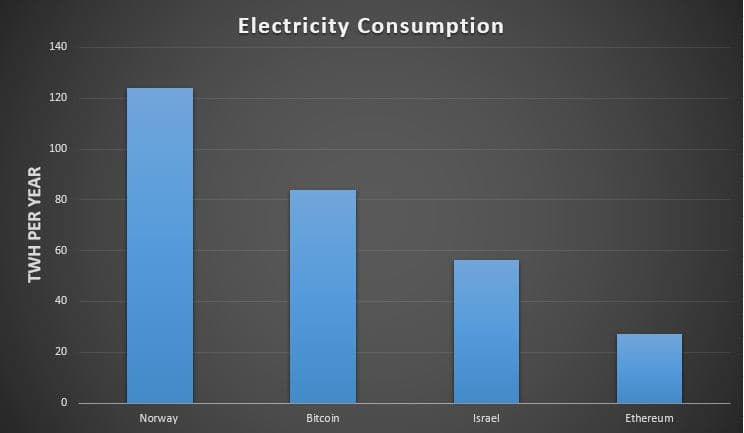
It's important to note that Ethereum is moving away from this type of mining, and over to "proof of stake". This is a very different way of validating transactions, and securing the network. However, it's probably years away, and therefore not relevant to the current discussion.
Decentralization:
They are both decentralized in the sense that no central authority can manipulate the network, of stop transactions "just because they want to".
The miners, those who dedicate their computing power to secure the network, as well as the developers, are the ones who control Bitcoin and Ethereum.
The way it works is that developers come with suggestions to improve the network, like lowering transactions fees or adjusting the security protocols, and then the miners and developers vote on what they want to do.
The weight of the vote depends on the computing power (hash rate) that the miners has contributed to the network. If you contribute 20% of the total computing power, your vote weights more than a guy who contributes 5% of the total computing power.
In this way, both Bitcoin and Ethereum are decentralized and make upgrades and adjustments in a democratic manner.
Differences between Bitcoin and Ethereum
The main difference between Bitcoin and Ethereum is their function.
They were built to do different things, and as a result differ in function. Let's look them them both, and compare them to each other:
The Function of Bitcoin
Bitcoin is a store of value, like gold. It's function is to not lose value over time, and protect people against inflation. It does this well because of it's maximum supply of 21 million BTC (absolute scarcity) and it's deflationary economic model, due to the halving.
Guys like Chamath Palihapitiya has even called it "schmuck insurance", as it protects you against irresponsible monetary policies from central banks and governments.
Also, the money printing and inflation we are seeing due to COVID-19 has been a wake-up call for institutions. They have started to look for a place to put their money that is likely to keep it's value over time – they are increasingly choosing Bitcoin.
The Function of Ethereum
Ethereum on the other hand, is a lot more practical. Although it's a great investment opportunity, it's main function is not to store wealth.
In fact, Ethereum is actually a platform - not a currency. ETH is the currency used on the Ethereum platform.
Ethereum, the platform, is a “programmable blockchain.” This means that programmers can alter the blockchain and make new applications.
This is makes it similar to the internet. One can build a whole project using Ethereums blockchain.
We call applications built on the Ethereum blockchain decentralized applications, or Dapps for short.
These applications gain the benefits of blockchain tech, like privacy, reliability, and decentralization.
Another great thing about Ethereum is smart contracts:
Smart contracts solve the issue of trusting the other party, or a third party, when making a deal. A smart contract is simply a contract that executes automatically when the two or more parties involved meet the requirements.
Alright, let's get to the point:
Bitcoin vs. Ethereum Investing
The easy short answer is, as always, "it depends". It depends on the risk you're willing to take, as well as the returns you're satisfied with.
Let's look at the potential ROI, and the risk associated with investing in Bitcoin vs Ethereum:
The Potential Returns of Bitcoin vs Ethereum
My Bitcoin price prediction for 2021 is currently aimed at $100 000, while my Ethereum price prediction is in the $8000 range.
At the time of writing, the Bitcoin price is $60K, and Ethereum is $1.7K.
Under those price targets, the implied ROI was 66% for Bitcoin and 370% for Ethereum.
In other words, the potential returns of investing Ethereum is way higher than Bitcoin.
In the long term (5-10 years), I believed Bitcoin could reach $1,000,000 and Ethereum could reach $100K.
Now, let's also look at the risk of investing in Ethereum vs Bitcoin to get the full picture:
The Risk of Investing in Bitcoin vs Ethereum
Generally, there are two types of risks to consider when investing; Systemic risk and idiosyncratic risk.
Systemic risk is the risk of a market crash, i.e. that we see the crypto market plummet. It's the risk inherent to the system (the crypto market).
Idiosyncratic risk is the risk of that specific crypto crashing, i.e. Bitcoin/Ethereum crashing, but not the rest of the market.
In Bitcoins case, these two kinds of risk merges, as Bitcoin is the market mover. If Bitcoin crashes, the market crashes with it. Therefore, the systemic risk and the idiosyncratic risk are "one and the same".
For Ethereum, these two risks are separate.
The right way to think about it is that the risk of investing in Ethereum is equal to the risk of investing in Bitcoin, plus the idiosyncratic risk of Ethereum failing.
The idiosyncratic risk of investing in Ethereum is the risk of Ethereum being hacked, competitors taking market share, or failing to implement an upgrade - resulting in the blockchain not working.
If you can live with these risks, Ethereum is the better option in my opinion.
However, the comparison depended on the prices at the time, because the difference in potential ROI was the main argument for preferring Ethereum.
In my framework, Ethereum's added risk had to be justified by a higher potential return.
The Adoption of Bitcoin vs Ethereum
Again, the adoption of the two cryptocurrencies are both high, but in different ways.
Bitcoin is adopted when people buy and hold it, as the function of Bitcoin is to be used as a store of value.
Ethereum, on the other hand, is adopted when people use it's dapps and smart contracts, and when people develop stuff on its blockchain.
The Adoption of Bitcoin
Bitcoin has seen adoption at an accelerated rate in the last few years. In the eyes of institutions, it has gone from being a "risky asset" to a "hedge against inflation".
We've seen companies like Micro Strategy and Tesla buy billions of dollars' worth of Bitcoin, and tons of businesses now accept it as a payment method.
At this point, you can use Bitcoin to buy cars, book hotel rooms, buy plane tickets and much more. Personally, I recently bought a telescope with Bitcoin.
The Adoption of Ethereum
The adoption of Ethereum has also increased a lot. The latest news was that Amazon let's you run Ethereum nodes through them. Basically, Amazon has embraced Ethereum, and they are involved in it's blockchain development.
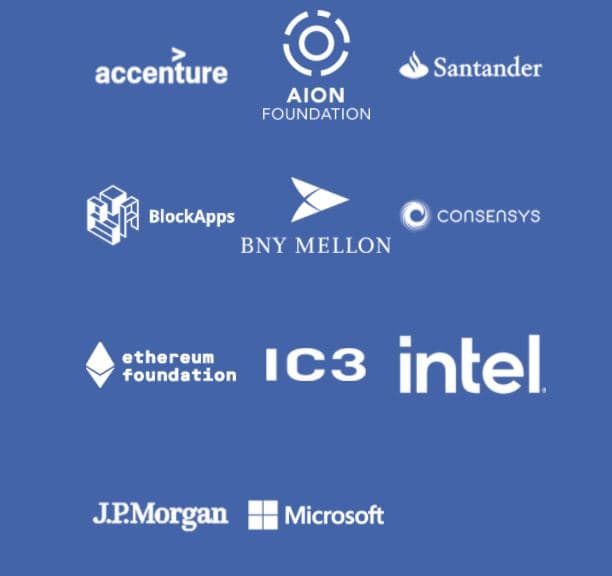
The Enterprise Ethereum Alliance (EEA) offered one view of institutional adoption: more than 200 institutions and businesses working together on Ethereum and related business opportunities.
Its board included the organizations shown below:
(source: https://entethalliance.org/)
That's some big names right there…
Conclusion – Bitcoin vs. Ethereum
There are similarities between Bitcoin and Ethereum. They're both decentralized and run on "poof of work" type mining.
The main difference is that the function of Bitcoin is to be a store of value, while Ethereum is a programmable blockchain that developers can build dapps on.
For investors, the way to pick the winner of bitcoin vs. Ethereum is to look at the potential ROI, and take into consideration the idiosyncratic risk of Ethereum. If the increased potential return of Ethereum outweighs the added risk, it's the best investment.
The institutional adoption of both Bitcoin and Ethereum is high, and increasing fast. The fact that Tesla invested billions of dollars in Bitcoin is a true testament to how far the adoption of Bitcoin has come. On the other hand, Ethereum has the EEA backing it up – with big names like Microsoft, Santander and J.P.Morgan.
Overall, the victory goes to Ethereum for investors and to Bitcoin for those interested in the economic revolution that cryptocurrencies will bring.
At least at the time of writing, the potential returns of investing in Ethereum is high enough that it justifies the added risk.
However, my thesis was that Bitcoin could change the economic system, while Ethereum could become a new application layer for the internet. I saw Bitcoin as the stronger candidate for a global reserve asset.