

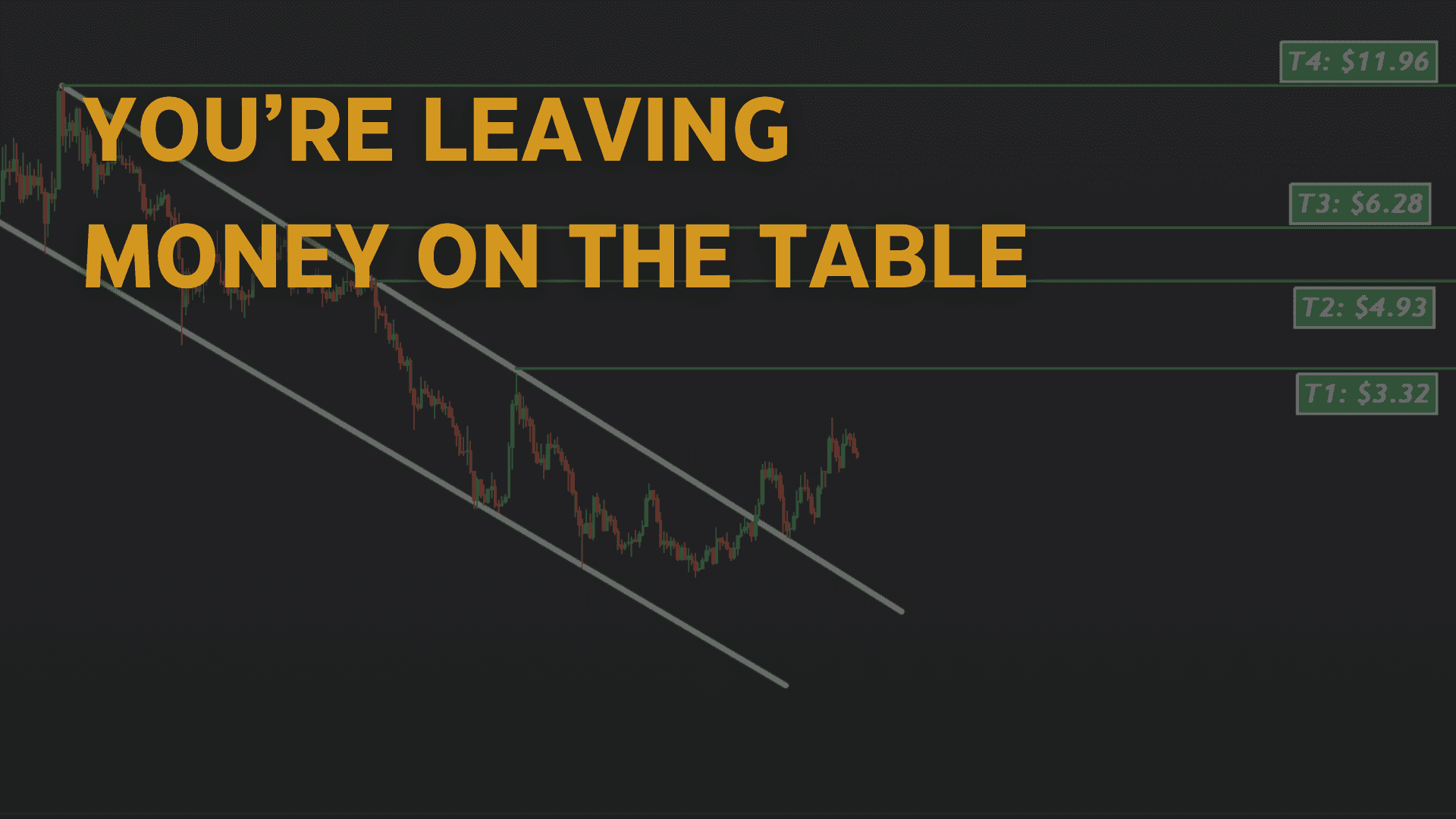
Realizing gains was as important to my process as identifying entries.
This post records the strategies and tools I used to turn paper gains into realized gains.
The broader altcoin-cycle system covers portfolio construction, trading, and exits together.
1. Use a Tiered Profit Approach
I sold in tiers rather than exiting everything at once.
How it works: Break your total position into smaller chunks, such as 25%, 50%, and 25%. Sell each chunk at progressively higher price points.
Example: Imagine you hold 10 Ethereum bought at $1,000 each.
Sell 25% at $1,500 to lock in initial gains.
Sell 50% at $1,800 to secure most of your profits.
Keep the remaining 25% for a potential run to $2,500.
This was designed to lock in part of the gain while leaving room for more upside.
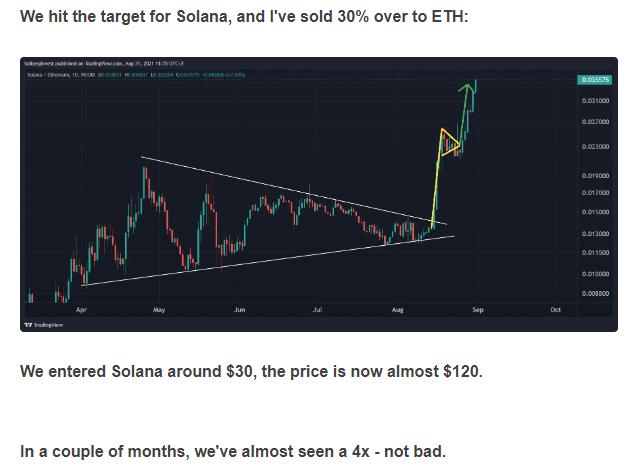
Why didn't I sell it all? Because I knew it had the potential to go higher.
Why did I sell anything when I thought it was going higher? To de-risk my position in case I was wrong.
2. Book Profits Early: The 5% Rule
I aimed to sell just before the market hit my target and generally realized profits 5% below the target price.
I preferred to lock in most of the modeled gain rather than hold out for the last 5% and risk a reversal.
Why this works: Markets are unpredictable, and prices often reverse before hitting your ideal number.
Example: With a $2,000 target, I would sell at $1,950 to lock in most of the modeled gain rather than wait for the exact target.
3. Use Technical Analysis to Set Targets
I used technical analysis to identify possible profit targets and areas where the market might turn.
The beginner technical-analysis guide explains that framework.
Key tools:
Support and Resistance Levels: Identify price points where the market has struggled before. These levels often act as barriers. For example, if Bitcoin’s resistance is $50,000, consider taking profits at $49,500.
Fibonacci Levels: I used Fibonacci retracement and extension tools to find possible price levels. I treated an approach to a 161.8% extension as one possible selling area.
Trendlines: I drew trendlines on the chart and treated an approach to the upper trendline in an uptrend as another possible area to lock in profits.
A separate altcoin swing-trading guide applies those tools over longer timeframes.
4. Automate Profit-Taking
I used limit orders to automate parts of the process.
Limit orders: I set sell orders to execute automatically when target prices were hit. This reduced the role of emotion in execution.
Trailing stop-losses: I used trailing stop-losses to leave room for further gains while protecting against a sudden reversal. For example:
Set a trailing stop 10% below the current price.
If the price rises, your stop loss should follow.
If the price falls, your stop-loss triggers, locking in gains.
5. Reinvest Your Profits
After taking profits, I decided whether to keep cash or reallocate it according to the portfolio plan.
Ideas for reinvestment:
Move gains into Bitcoin or Ethereum for stability.
Diversify into promising altcoins with strong fundamentals.
Keep some profits in cash to prepare for dips.
This kept my portfolio aligned with the plan for the next opportunity.
Conclusion: Lock It In
For me, taking profits separated a planned process from one based on luck. Clear targets, technical analysis, and automation were meant to reduce emotion and stress.
The market did not care about my emotions, so I followed the exit rules I had set in advance.