

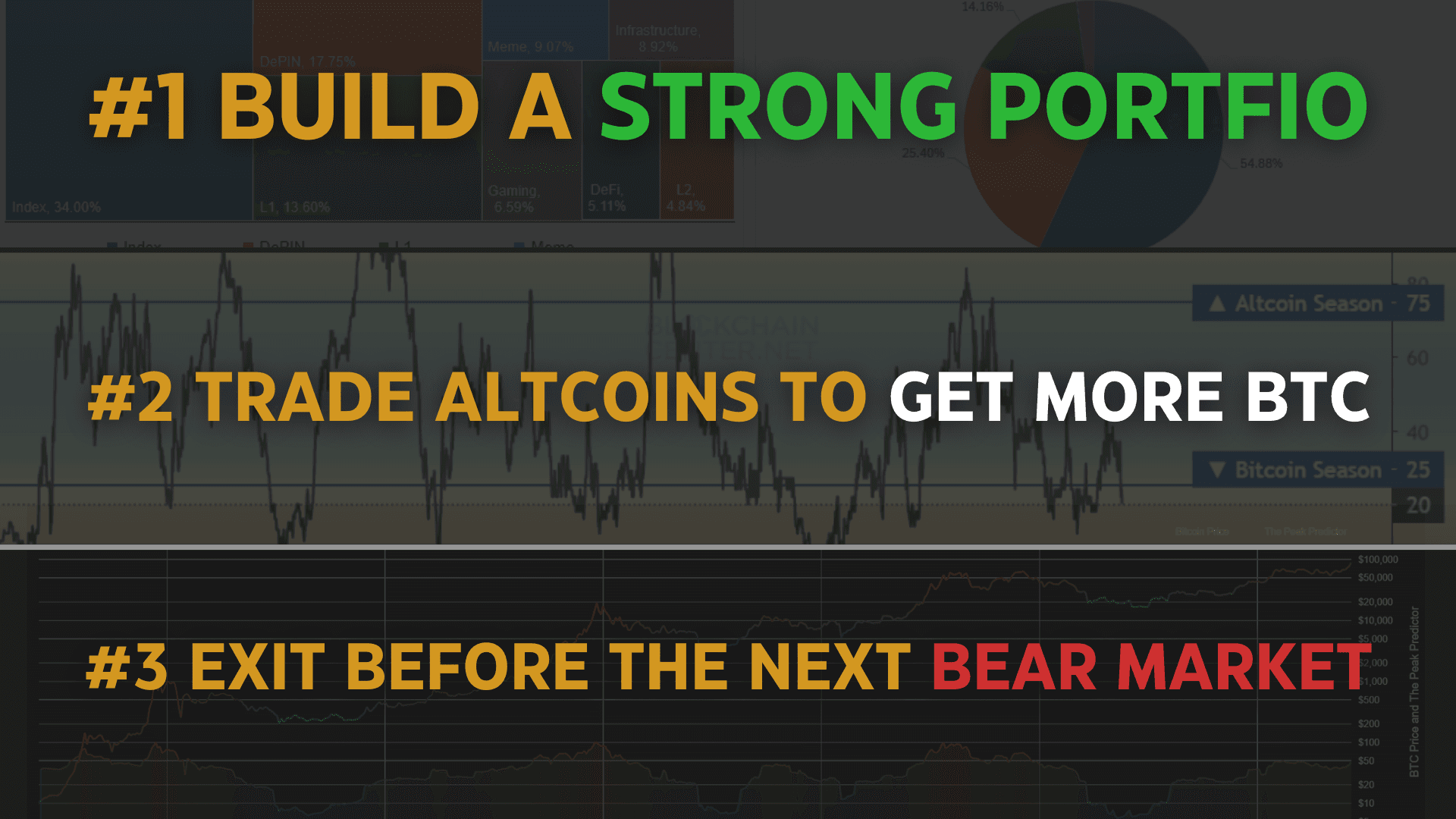
This article documents the portfolio construction, altcoin-cycle rotation and exit rules I called The Market Mastery System.
How I Tried to Compound Returns
Compounding is what happens when you get returns on your initial investment AND on accumulated returns.
The system had one goal: accumulate more Bitcoin by rotating between Bitcoin and altcoins across market cycles.
How? By trading altcoin cycles.
Before describing the cycle, here is a hindsight calculation comparing holding Bitcoin with applying the system from January 2020 to October 2024, starting with $10,000:
HODLing: $10,000 → $70,404
Market Mastery System: $10,000 → $315,212
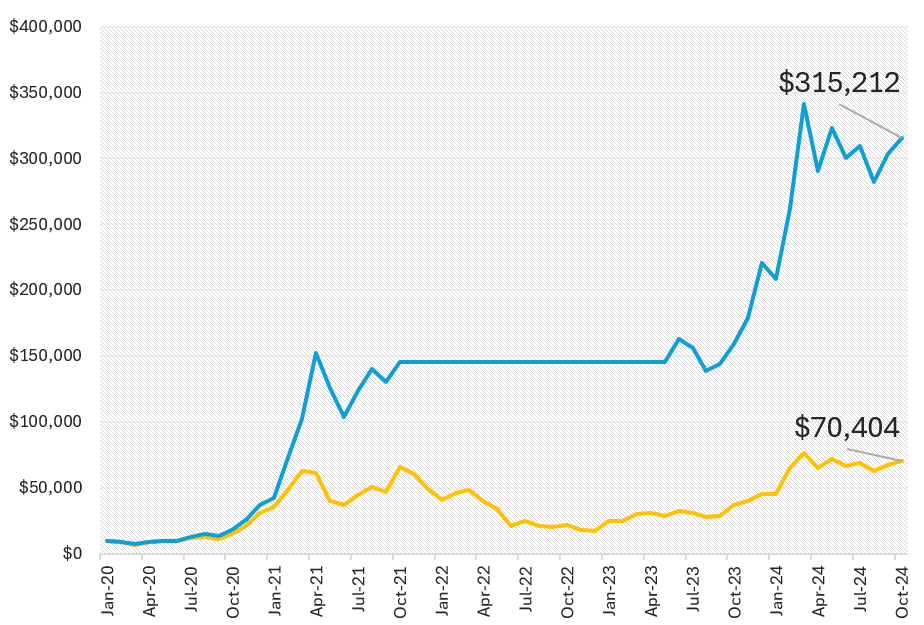
The comparison is a historical calculation based on the entry, rotation and exit rules described below.
It's All about The Cycles
In crypto, it matters less what you hold and more when you hold it.
Even if you found the “next Solana,” you could lose money if you found it at the wrong time.
For example, the average DePIN coin rallied 700% from October 2023 to March 2024. The same coins crashed by up to 80% in the following six months.
So, depending on the date you invested in a DePIN project, you stood to gain hundreds of percent or lose 80%.
The Market Mastery System is not about finding the best coin.
It’s about finding altcoins when they are cheap and selling them for Bitcoin when they are expensive.
The rest of the article explains that rotation process.
Step #1: BUILDING THE PORTFOLIO
"It is remarkable how much long-term advantage people like us have gotten by trying to be consistently not stupid, instead of trying to be very intelligent."
— Charlie Munger, Vice Chairman of Berkshire Hathaway
Before describing the construction process, here is what I meant by a strong portfolio:
A collection of fundamentally strong and technically bullish coins diversified across sectors and market caps according to risk tolerance.
So, you need to find good coins in different sectors of the altcoin market. Here's a list of the major sectors and a step-by-step way to do it:
Sectors Ranked by Risk Level:
Risk level 1: Index (Bitcoin)
Risk level 2: L1, Infrastructure
Risk level 3: L2, DeFi
Risk level 4: DePIN
Risk level 5: GameFi, AI
Risk level 6: Meme, Metaverse & NFT
Here's a short description of the sectors of the crypto market:
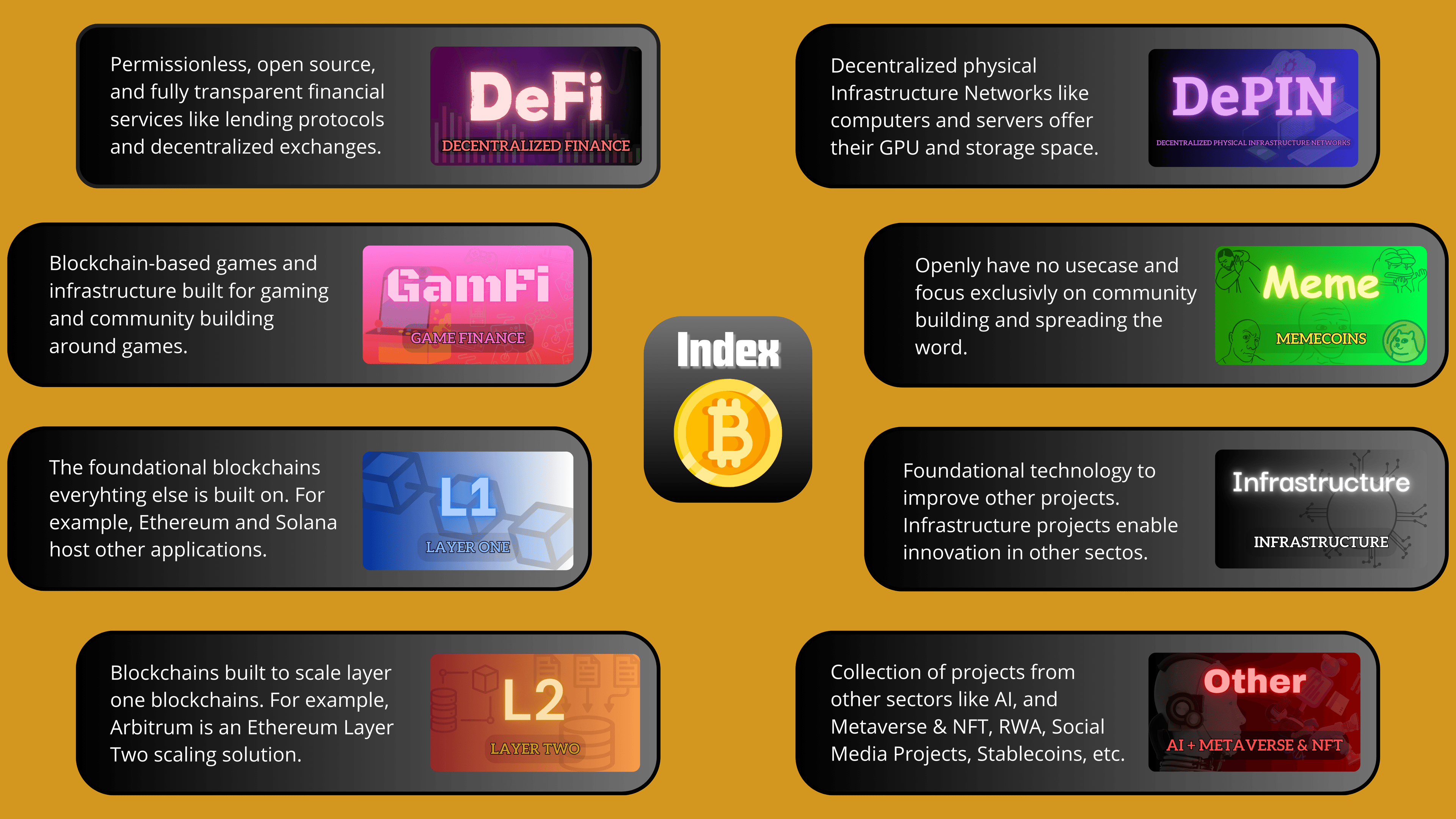
4 Steps To Build The Portfolio:
Find new altcoins Make a list of coins in different sectors, aiming for at least three coins per sector.
Fundamentally analyze the coins Look at the problem they solve, their technology, and their competitive edge.
Technically analyze the coins Evaluate price charts to separate bullish from bearish coins.
Buy the coins Allocate funds to fundamentally strong and technically bullish coins.
I've written several articles on these topics:
Step #2: TRADING ALTCOINS
"Be fearful when others are greedy and greedy when others are fearful."
— Warren Buffet
The next part of the system was rotating between Bitcoin and altcoins.
In short, my approach to altcoin trading is that it matters more when you hold altcoins than what altcoins you pick.
Even if you find "the next Solana", you'll lose money if you hold it when the altcoin market is declining.
That's why I care more about timing "The Altcoin Cycle" than finding the next best coin.
The Altcoin Cycle
The rotation approach was based on the altcoin cycle.
What is an Altcoin Cycle?
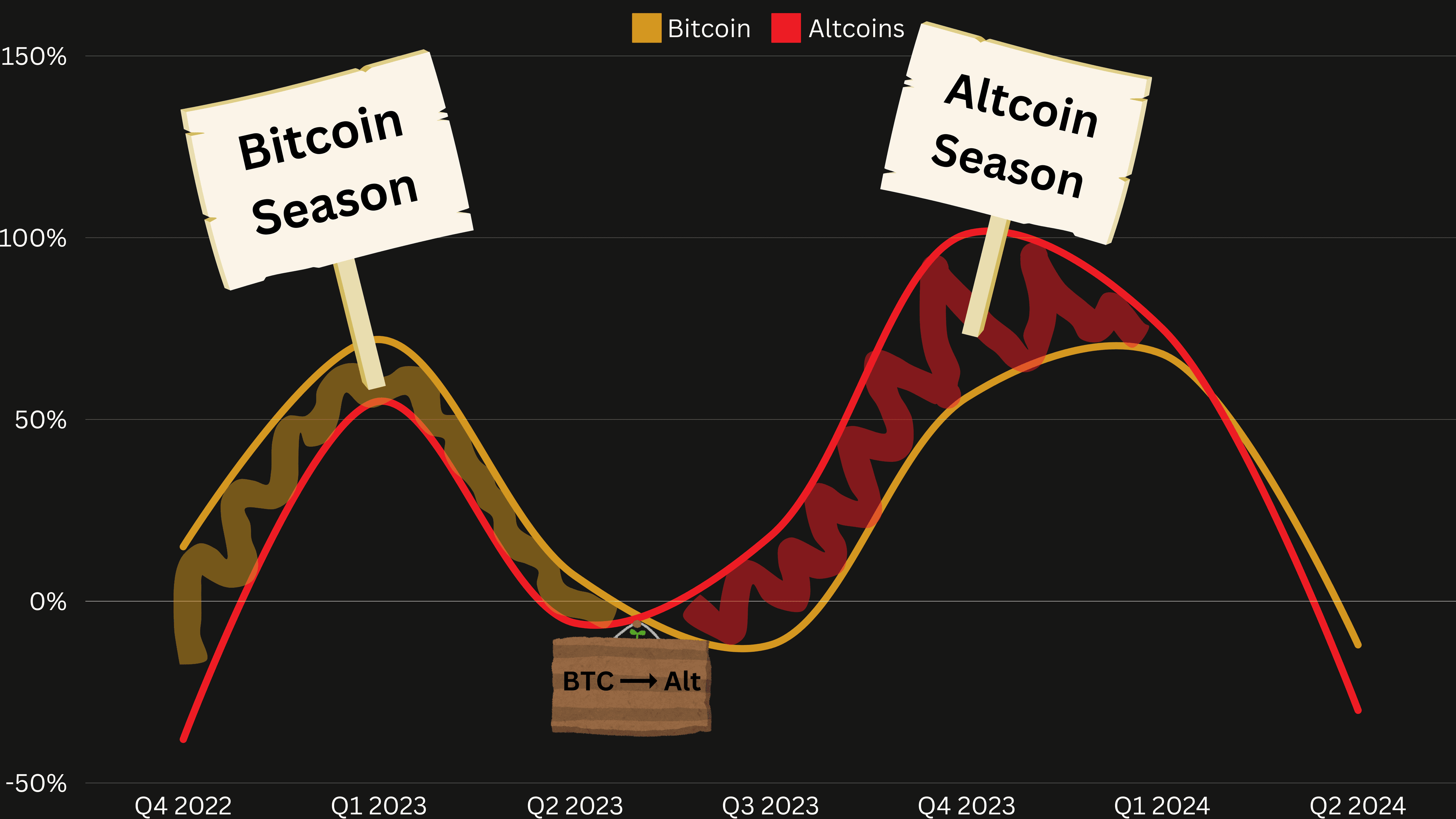
Altcoins cyclically outperform and underperform Bitcoin.
In altcoin seasons, altcoins outperform Bitcoin. In Bitcoin seasons, altcoins underperform Bitcoin.
A single cycle consists of two seasons: one Bitcoin season and one altcoin season.
How I Used Altcoin Cycles
My process had two steps:
Buy altcoins with Bitcoin before altcoin season (BTC → Altcoins).
Buy back more Bitcoin with altcoins before Bitcoin season (Altcoins → BTC).
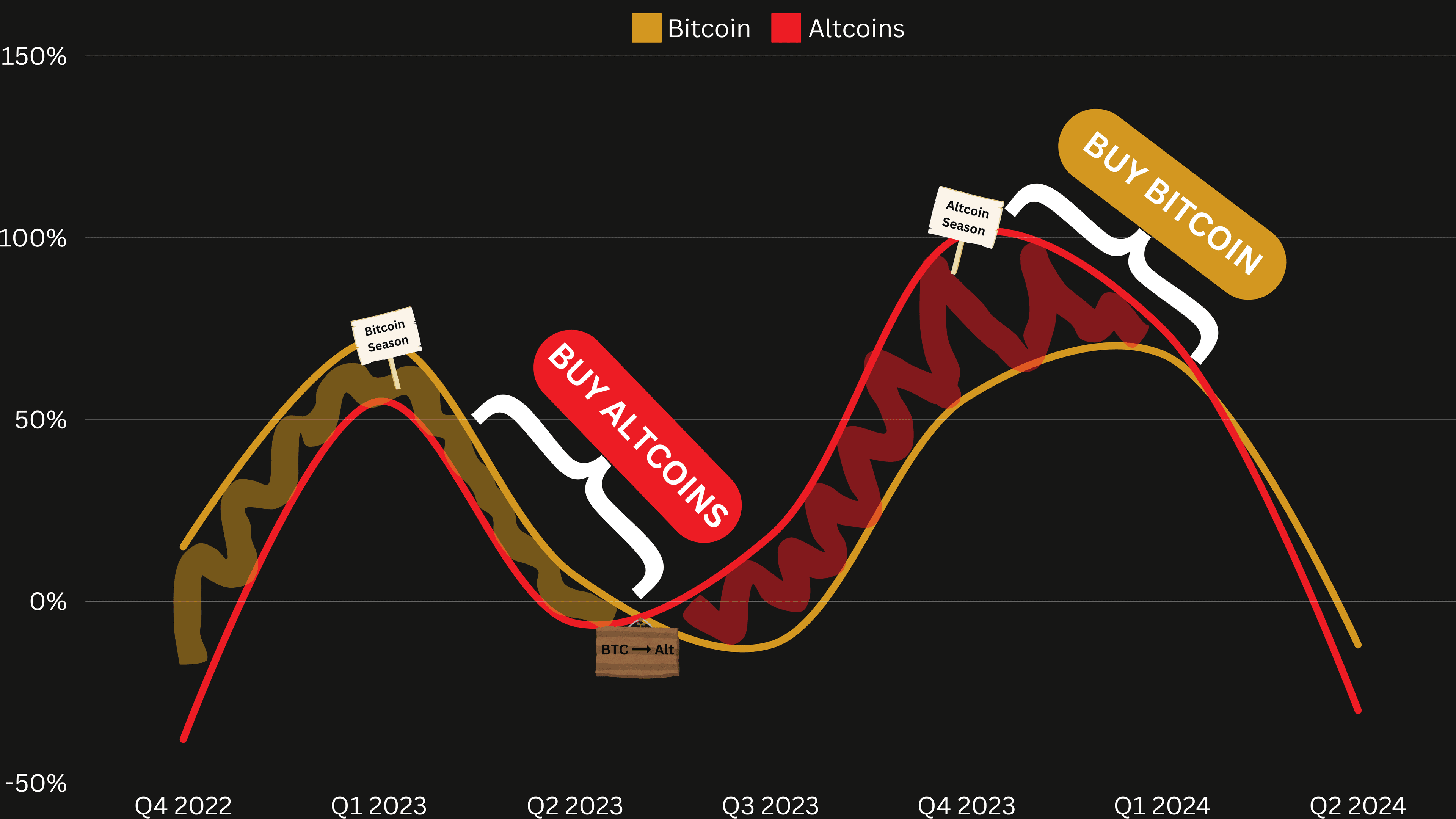
The key here is to use your BTC to buy altcoins, then sell those altcoins back to MORE BTC after the altcoin season.
The aim was to accumulate more Bitcoin through relative moves between Bitcoin and altcoins.
The Rules of Trading Altcoin Cycles
To trade altcoin cycles, you need to know two things and follow two simple rules:
Things to Know
Which season we’re in.
When we’re heading into a new season.
Things to Do
Buy altcoins towards the end of Bitcoin season, by selling Bitcoin.
Buy back more Bitcoin towards the end of altcoin season, by selling altcoins.
How Do You Know Which Season We’re In?
Use indicators to identify the current season and when the transition is happening.
The Altcoin Season Index Measures how many altcoins have outperformed Bitcoin in the past 90 days. In my framework, broad altcoin outperformance was a signal to consider rotating back toward Bitcoin.
Bitcoin Dominance (BTC.D) Shows Bitcoin’s market share relative to altcoins. I watched “BTC.D” on TradingView: rising dominance favored Bitcoin in this framework, while falling dominance favored altcoins.
Others Dominance (OTHERS.D) Tracks the market share of small altcoins. I also watched “OTHERS.D” on TradingView to evaluate smaller-coin strength.
Step #3: PLANNING THE EXIT
"Bull markets are born on pessimism, grow on skepticism, mature on optimism, and die on euphoria."
— John Templeton
At this point, the system had a portfolio framework and a rotation process.
This chapter is about cashing out before the next bear market.
Why Cash Out?
During a bear market, your portfolio can lose up to 80% of its value.
If your portfolio drops by 80%, you’d need a 5X gain just to break even.
(If you only have 20% left, you need 5X to get back to 100%)
My objective was to reduce exposure as indicators became stretched and rebuild it after large declines.
Three Main Approaches to Cash Out
Price Target Strategy Gradually cash out as prices approach a predetermined target. Problem: Price targets are static and don’t adjust to the dynamic nature of the market.
Technical Analysis Use price charts to estimate potential trend reversals.
Indicator-Based Strategy Use indicators that have historically identified stretched market conditions.
How to Create an Exit Strategy
My approach: Combine technical analysis with indicators to form a dynamic exit strategy.
I sold gradually as the indicators and technical analysis suggested the market was approaching a potential top.
Example Exit Plan Using Indicators
Sell 10% of your portfolio when an indicator reaches 70/100.
Sell 25% when it reaches 85/100.
Sell 50% when it reaches 90/100.
Sell everything if the indicator reaches 95/100.
You can also set a stop-loss statement, such as: “If Bitcoin closes below the 20-week moving average, sell everything.”
Useful Indicators
Pi Cycle Top Indicator (technical indicator) Identifies market peaks by analyzing the distance between two moving averages.
Logarithmic Regression Models (statistical indicator) Tracks long-term price growth and identifies overbought conditions based on statistical models.
MVRV-Z Score (on-chain indicator) Analyzes market value versus realized value to predict tops and bottoms.
Technical Price Patterns Use charts to identify when the trend might turn. For example, look at the 20-week moving average and sell if we have a weekly close below it.
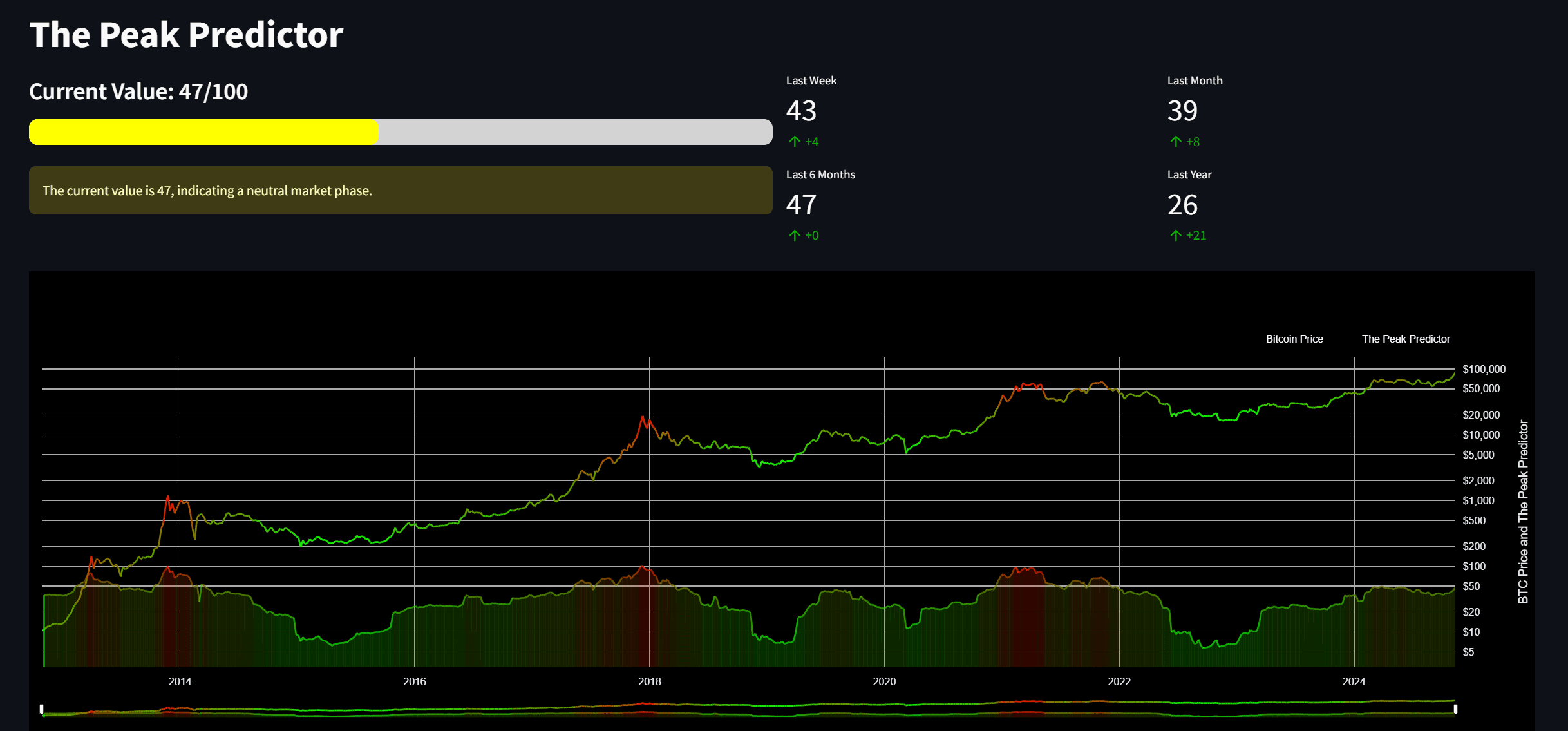
I use a model that aggregates data from four other indicators, including "The Pi Cycle Top Indicator", "MVRV Z-Score", a logarithmic regression model, and a model called "Bitcoin Cycle Master".
I gradually reduced positions as this aggregate indicator approached 100/100.
FINAL THOUGHTS
The system focused on three parts:
Setup: Build a strong, diversified portfolio.
Management: Trade altcoin cycles to accumulate more Bitcoin.
Exit: Use indicators to cash out before bear markets.
Other inputs were secondary to those portfolio, rotation and exit rules.
System > Prediction
I preferred a consistent system to relying on a single prediction: a defined portfolio, explicit rotation rules and a planned exit process.