

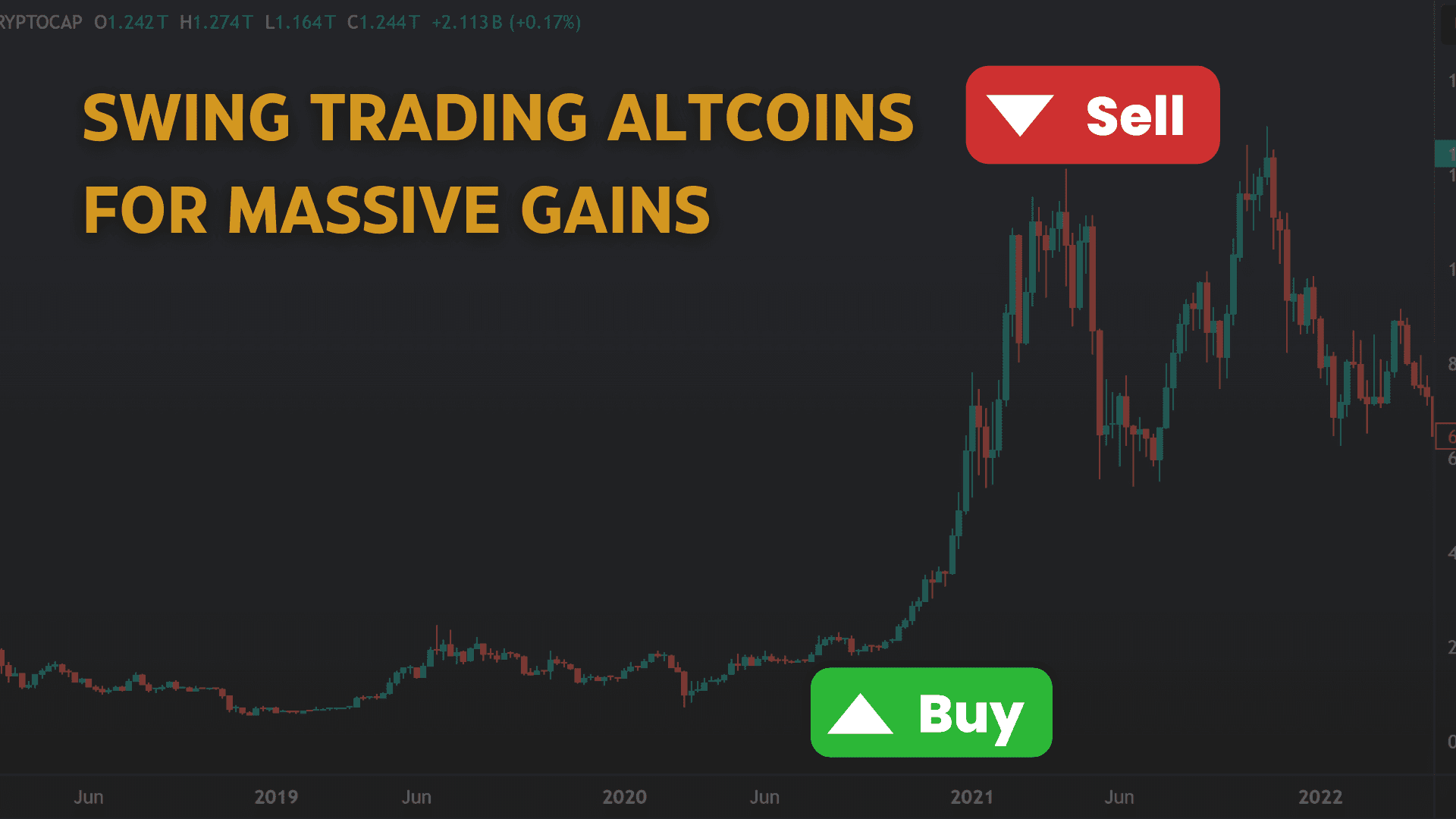
Swing trading altcoins was one way I tried to act on the crypto market's large price swings through a repeatable process.
Swing trading involves buying altcoins during dips and selling during short- or mid-term upswings, aiming to capture part of a move over days, weeks, or months.
Swing trading altcoins was most effective for me during altcoin season and was central to the system I used over a 16-month period.
The process had three steps.
What Is Swing Trading?
Swing trading is a strategy where you hold an asset for a short time—usually a few weeks, sometimes months—to profit from price swings. It’s not as intense as day trading, but it still lets you capitalize on the market’s volatility.
I focused on altcoins because:
They’re volatile, meaning big price swings happen often.
Many follow predictable cycles tied to Bitcoin’s moves.
News, partnerships, or hype can spark quick surges.
The goal was not to catch the exact bottom or top, but the middle of a swing. Consistency mattered more than a single large trade.
What I did: I used a longer timeframe, usually a few months, and tried to capture the larger moves in the altcoin cycle.
How to Swing Trade Altcoins in 3 Steps
1. Choose the Right Altcoins
Not every coin is good for swing trading. You want ones that:
Have high trading volume (so you can buy and sell easily).
Show consistent patterns of ups and downs.
Have an active community or upcoming news that can drive momentum.
Related: Finding New Altcoins
Market-data tools such as CoinMarketCap and TradingView supplied the volume and trend data I used.
2. Find Entry and Exit Targets
Swing trading relies on understanding charts. You have to technically analyze the price charts to find the best prices to buy and sell the coin you're trading. Don’t worry—it’s not rocket science. Start with these basics:
Support and Resistance: Support is a price level where the coin usually bounces up. Resistance is where it tends to get stuck.
Moving Averages: These show trends. If the price is above the 50-day moving average, it’s a sign of strength.
RSI (Relative Strength Index): This tells you if the coin is overbought (too high) or oversold (too low), which often signals reversals.
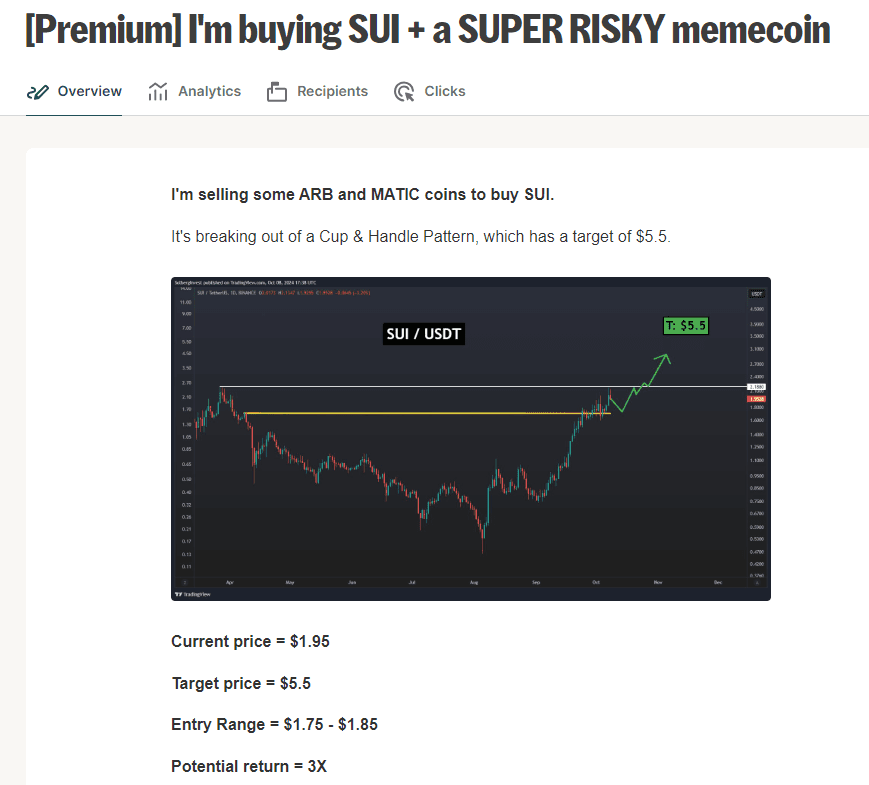
Example: If an altcoin bounces off support and the RSI shows it’s oversold, that may indicate an upswing.
The technical-analysis guide explains these concepts in more detail.
3. Set Clear Targets and Stop-Losses
Don’t just wing it. Before entering any trade:
Set Your Target: Decide where you’ll sell, depending on risk tolerance, and time frame.
Set a Stop-Loss: In crypto this is optional. The volatility is so large that sometimes the risk of getting "wicked out", which is when the price dips sharply to trigger your stop loss and then rallies up to your target, is greater than the risk of losing 10% or more. I decided the maximum I was willing to lose and sometimes placed the stop 10% below my initial level to reduce that risk.
Tips for Success
Be Patient I did not chase every trade. I waited for a clear setup—support, resistance, or a strong trend. Missing out was better than making a bad trade.
Manage Risk I kept swing trades small—generally 5%-10% of the portfolio in this framework—and kept the rest in longer-term holdings.
Stay Updated Altcoins can swing wildly due to news or updates, so I monitored announcements, partnerships, and market sentiment.
Conclusion: Swing Trading Altcoins
Swing trading did not need to be complicated. In my process, consistent execution mattered more than a single large win.