

The cryptocurrency market can be unforgiving. A well-thought-out investing strategy gives you rules to follow when prices move quickly.
In this article, I’ll walk you through four strategies, explain how they work, and help you decide which one suits you best.
But first, let’s get clear on what a strategy is:
What Is a Strategy?
A strategy consists of two key components: actionable steps and a measurable goal.
That’s it.
Here’s an example:
"I will buy $500 worth of Bitcoin weekly while the price is below $125,000 and sell when my portfolio reaches $1,000,000."
In this case:
The goal is to reach $1M.
The steps are:
Buy $500 worth of Bitcoin weekly while it’s below $125,000.
Hold until your portfolio hits $1M.
Sell everything when your goal is met.
Now that you know the basics, let’s dive into the four strategies.
For the broader framework, see my guide to building a complete crypto investment system.
Strategy #1: DCA + HODL
HODL (Hold On for Dear Life) is probably the most popular approach among crypto investors. It’s simple, low-effort, and perfect if you’re a long-term believer in crypto.
The concept is straightforward: Dollar-Cost Average (DCA) your way in and hold on until you hit your goal. DCA means you invest a set amount regularly—regardless of price.
Example:
Goal: Build a portfolio worth $250,000. Steps:
Invest $1,000 in Bitcoin every month.
Sell when your portfolio reaches $250,000.
Reward yourself with something fun (like ice cream) for sticking to the plan.
Pros:
Easy to follow.
Requires minimal effort or market knowledge.
Cons:
Slower growth potential compared to more active strategies.
If you want higher returns with just a little extra effort, Strategy #2 might be a better fit.
Strategy #2: Buy the Dip (BTD)
The Buy the Dip (BTD) strategy takes DCA to the next level. Instead of investing a fixed amount every month, you adjust your investment based on price movements. When prices dip, you invest more; when they rise, you invest less.
This approach lowers your average buy price, improving your overall ROI.
Example:
Goal: Build a portfolio worth $250,000. Steps:
Invest in Bitcoin on the first of every month.
If the price increased last month, invest $750. If the price dropped, invest $1,500.
Sell when your portfolio reaches $250,000.
Pros:
Low-effort, requiring only monthly adjustments.
Can reduce your average cost per coin compared with fixed monthly purchases.
Cons:
Requires discipline to stick to the plan, especially when prices are volatile.
BTD is a solid middle-ground strategy, but if you want to keep your portfolio balanced and optimized for current market conditions, Strategy #3 might be for you.
Strategy #3: Rebalancing
As the market moves, certain coins may outperform others, skewing your portfolio’s balance.
Rebalancing is the process of selling some of your winners and redistributing those funds to de-risk your portfolio and lock in profits.
This strategy can also align with the cycles of the crypto market. For example, during Bitcoin season, you might go Bitcoin-heavy, and during altcoin season, you might hold more altcoins.
Example:
Goal: Keep a balanced portfolio that aligns with market cycles. Steps:
Allocate your portfolio across Bitcoin and altcoin-sectors (e.g., 50% Bitcoin, 10% DeFi, 10% Layer One, 7% GameFi, etc.).
At the end of every quarter, review your portfolio.
If Bitcoin has grown to 60% of your portfolio, sell some and redistribute it into altcoins to restore your original allocation. If altcoins have overperformed Bitcoin, sell some of it into Bitcoin to regain your initial allocation from step one.
Pros:
Helps lock in gains systematically.
Ensures your portfolio stays aligned with your strategy.
Cons:
Requires periodic review and action, but manageable in 30 minutes a month.
Can be complicated to keep track of your sector allocation, but using Excel it becomes easy.
Rebalancing was the lowest-effort active strategy in this comparison. The full rebalancing guide explains the process.
Strategy #4: Swing Trading (ST)
Swing trading involves actively buying during downtrends and selling during uptrends. Essentially, you ride the price waves, aiming to maximize your profits by timing your buys and sells.
Unlike HODL or BTD, swing trading requires a deeper understanding of price charts and trends. But don’t worry—it doesn’t have to be overly complicated when you start.
How It Works:
Let’s say you notice a trend channel on a chart (like ETH/BTC). Like this one:
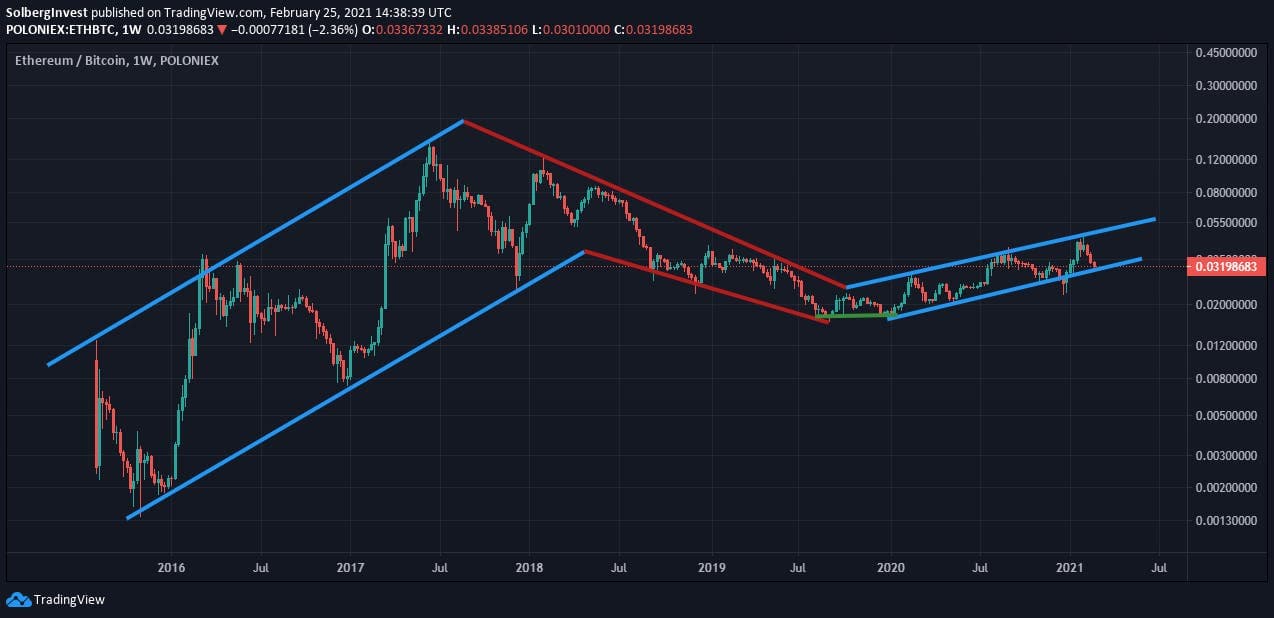
You can:
Buy ETH with BTC when the price is near the bottom of the channel.
Sell ETH for BTC when it reaches the top.
Repeat the process for as long as the trend holds.
This chart shows where to buy and sell Ethereum for Bitcoin:
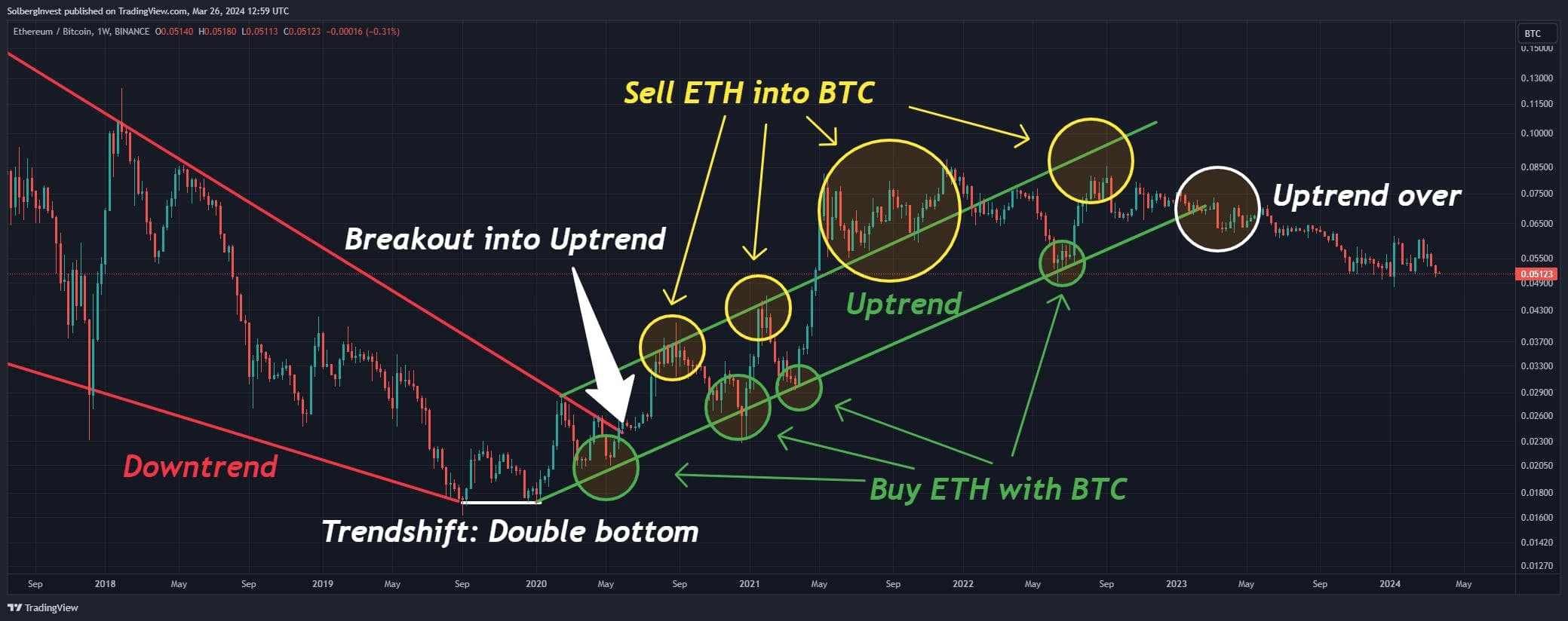
This was the method I used during one cycle, when I roughly tripled my Bitcoin holdings.
My swing-trading guide explains the approach in more detail.
Pros:
Higher potential returns.
Lets you actively grow your portfolio without needing daily attention.
Cons:
Requires learning technical analysis.
Mistakes can be costly.
Which Strategy Is Right for You?
Choosing the right strategy comes down to your goals and the time you’re willing to invest:
If you want something simple and hands-off: Stick with HODL.
If you’re okay with a bit of effort for better returns: Go for BTD.
If you want to maintain balance and optimize for market conditions: Try Rebalancing.
If you’re ready to get active and maximize your growth: Start Swing Trading.