

Rebalancing your portfolio is a powerful yet often overlooked strategy in crypto investing. It’s about keeping your portfolio aligned with your risk tolerance and strategy as the market evolves.
Done right, rebalancing can help you lock in gains, minimize risks, and position yourself for future opportunities.
It's less risky and requires less effort and skill than swing trading altcoins, as you don't need to know much technical analysis or stress over how to take profits from altcoin trading.
The sections below document the rebalancing process I used.
Why Rebalancing Matters
Crypto is volatile, this causes your portfolio to drift from your intended allocations.
For example, if altcoins surge while Bitcoin lags behind, you might end up with a portfolio that's too risky.
Rebalancing solves this by:
Realizing Gains: Selling part of an overperforming asset can convert some paper gains into realized gains.
Mitigating Risks: Overexposure to a single asset increases risk, especially if it suddenly underperforms.
Staying on Strategy: Rebalancing brings your portfolio back to your planned allocation, keeping your long-term goals intact.
Essentially, rebalancing is an easy way to solve a lot of problems at once.
When to Rebalance
Timing is crucial when it comes to rebalancing. There are two main approaches to consider:
Time-Based Rebalancing Set a fixed schedule—monthly, quarterly, or even annually—to review your portfolio and adjust it back to its target allocation.
Threshold Rebalancing Rebalance whenever an asset’s weight deviates beyond a predefined range (e.g., 10%). For instance, if Bitcoin grows to 70% of your portfolio when your target was 50%, it’s time to rebalance.
Cycle Rebalancing Rebalancing according to the altcoin cycle. This was the most active method I used. More on this later in the article.
How to Rebalance Your Portfolio
Set Your Target Allocations Decide how much of your portfolio you want to allocate to each asset or sector. For example:
60% Bitcoin
25% Ethereum
15% Altcoins split into different sectors (more on altcoin sectors later in the article)
Adjust to Targets If one asset has grown disproportionately, sell a portion and redistribute to underweighted assets. For example, if Bitcoin has grown to 70%, sell the excess 10% and allocate it to Ethereum or altcoins.
Consider Costs Account for trading fees and tax implications when rebalancing. Use exchanges with competitive fees to minimize expenses.
Rebalancing Across Altcoin Sectors
Rebalancing isn’t just about adjusting individual coin weights; it’s also crucial to maintain proper diversification across crypto sectors.
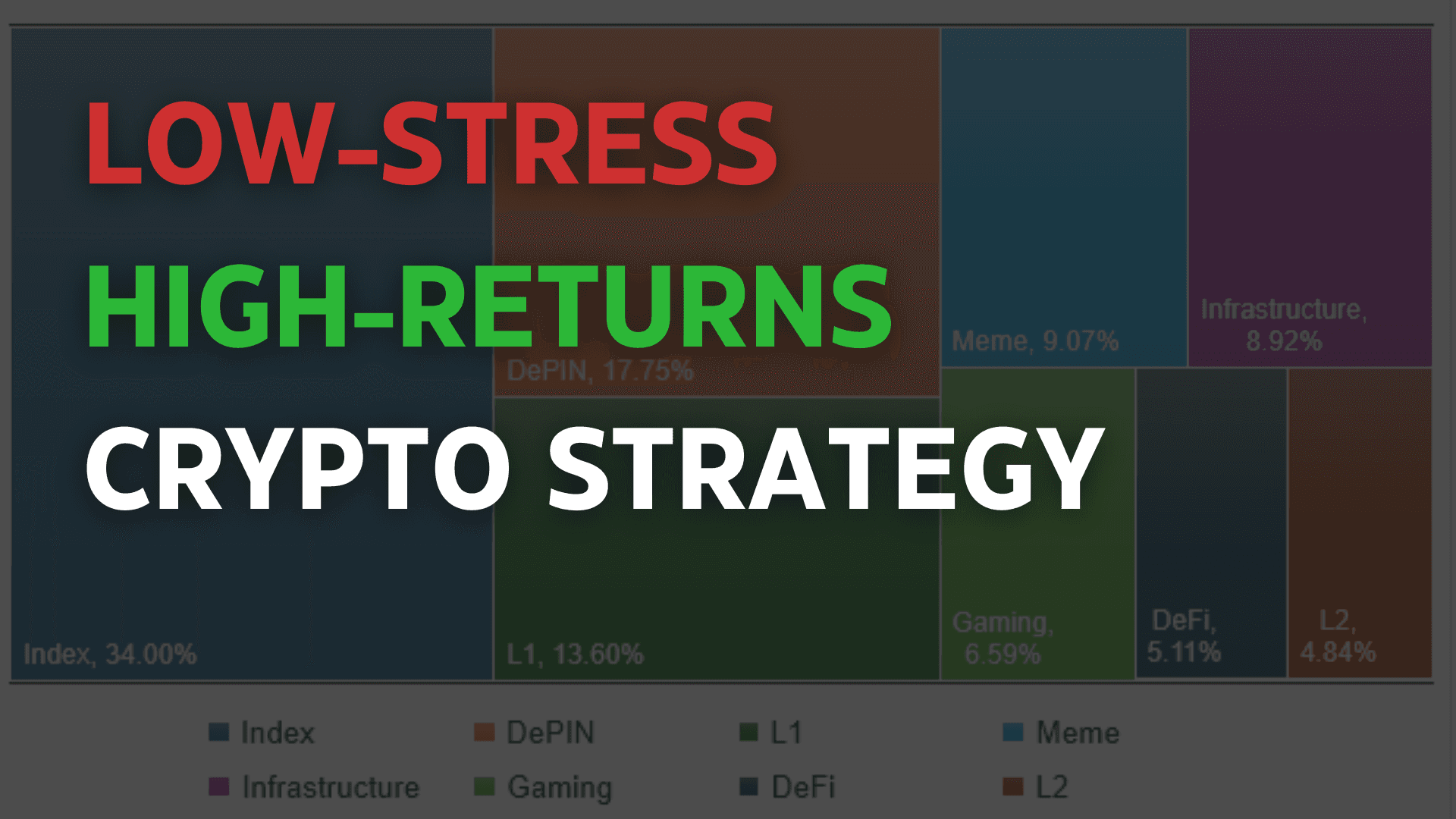
The altcoin market is divided into various sectors such as DeFi (Decentralized Finance), Gaming, Infrastructure, DePIN (Decentralized Physical Infrastructure), etc., each with different levels of risk and potential reward.
Why Sector Rebalancing Matters
Risk Diversification: A heavily concentrated portfolio in one sector is more vulnerable to downturns in that specific area. Spreading investments across sectors can reduce concentration risk.
Capitalizing on Trends: Crypto sectors often rally at different times. By maintaining a balanced allocation, you can pivot toward emerging trends without overexposure to declining sectors.
Volatility Control: A sector-diverse portfolio tends to experience smoother returns compared to one that’s overly focused on high-volatility sectors.
Here's a list of the sectors ranked by risk level:
Risk level 1: Index (Bitcoin)
Risk level 2: L1, Infrastructure
Risk level 3: L2, DeFi
Risk level 4: DePIN
Risk level 5: Gaming, AI
Risk level 6: Meme, Metaverse & NFT
How to Rebalance Across Sectors
Set Sector Goals Start by defining target allocations for each sector based on your risk tolerance. For example:
Conservative: 40% in Infrastructure, 30% in DeFi, 20% in Layer 2, 10% in Gaming.
Aggressive: 25% in DeFi, 20% in Gaming, 15% in AI, 15% in Memecoins, 15% in Infrastructure, 10% in DePIN.
Monitor Sector Weighting Over time, certain sectors may outperform others, leading to imbalances. For instance, if DeFi coins surge and now represent 50% of your portfolio (up from your 30% target), you can reduce exposure to that sector and reallocate to underperforming areas like Gaming or DePIN.
Rebalance During Altcoin Cycles Aligning sector allocations with the altcoin cycle enhances your strategy:
Altcoin Season: High-risk sectors like Gaming, AI, and Memecoins tend to outperform, so reallocating to these sectors can boost returns.
Bitcoin Season: Safer sectors like Infrastructure and Layer 1 coins perform better, making them ideal candidates for increased allocation.
Revisit Regularly A quarterly review is often sufficient to rebalance across sectors unless there’s a significant market shift.
Rebalancing According to the Altcoin Cycle
The crypto market operates in cycles, particularly the altcoin cycle, which alternates between:
Bitcoin Season: Bitcoin outperforms altcoins.
Altcoin Season: Altcoins outperform Bitcoin.
Adapting a portfolio to these cycles was intended to improve relative returns. Here’s the approach:
During Bitcoin Season: Increase your allocation to Bitcoin. For example, shift to a portfolio with 80% Bitcoin, 10% Ethereum, and 10% altcoins. This positions you to benefit from Bitcoin’s rally relative to altcoins.
During Altcoin Season: Reduce Bitcoin exposure and increase your allocation to altcoins. For example, rebalance to 40% Bitcoin, 20% Ethereum, and 40% altcoins to capitalize on altcoin momentum.
See the Altcoin Cycle of 2023 on the chart below:
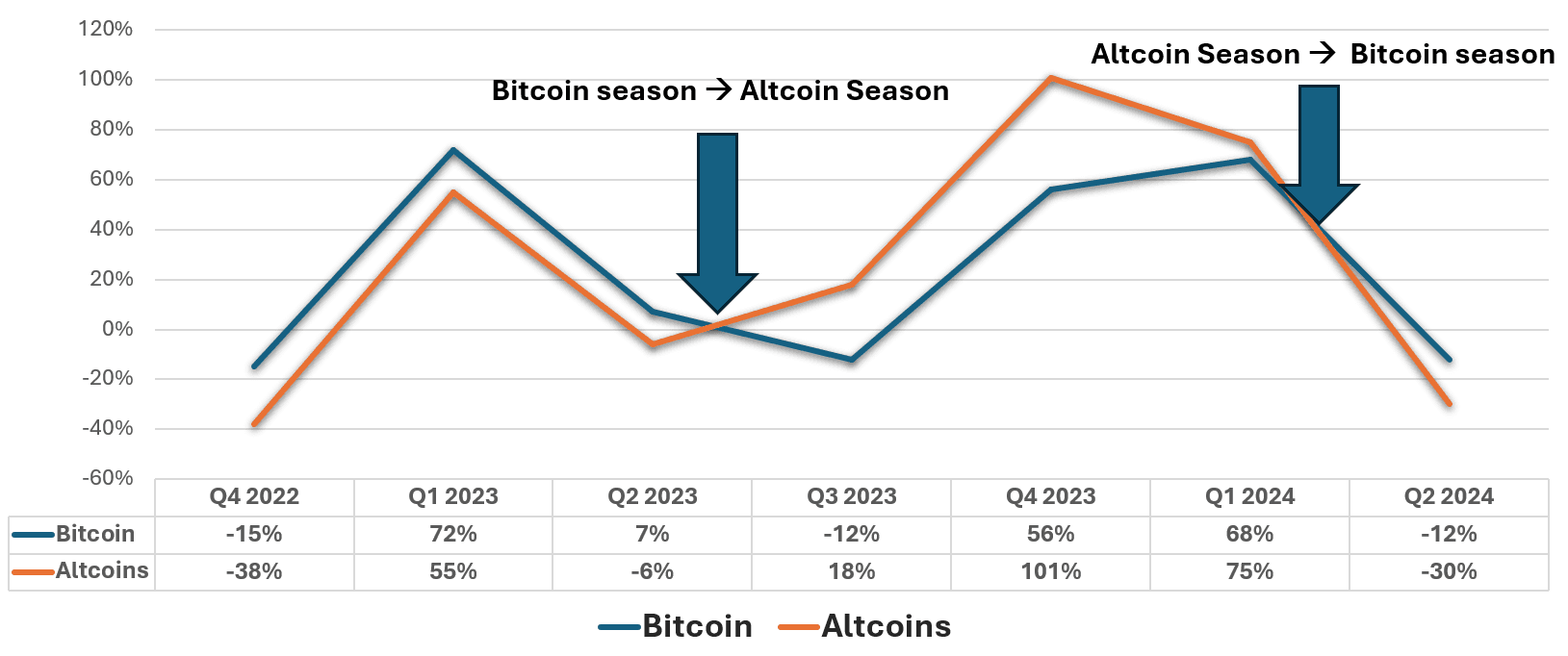
Indicators like Bitcoin dominance and the Altcoin Season Index can help identify these cycles. I used them to make the timing rules more systematic.
Applying those shifts mechanically to the historical cycle shown above produces a backtested return of roughly 6X and would have required about 30 minutes of monthly maintenance.
Mistakes to Avoid When Rebalancing
Overtrading Frequent rebalancing can erode gains with fees and taxes. Stick to a schedule or clear thresholds to avoid unnecessary adjustments.
Neglecting Market Trends Rebalancing blindly without considering market conditions—like the altcoin cycle—can lead to missed opportunities or increased risk.
Emotional Decisions Rebalancing is a strategic process, not an emotional reaction. Avoid panic selling or chasing hype-driven assets.