

Holding onto the wrong altcoin can be devastating. But if you can spot the warning signs early and take action, you can turn things around and come out ahead.
In this article, I’ll show you:
Warning signs that a coin is weakening.
What to do if it is.
Let’s dive in.
Your Altcoin Underperfoms Bitcoin
Persistent performance against Bitcoin was my main relative-strength test.
Bitcoin served as my baseline because it was more established and generally carried lower relative risk. If an altcoin persistently failed to outperform it, I treated that as a reason to reassess the position.
Here’s how to check:
Look at the BTC Pair: Check the coin’s price denominated in Bitcoin (e.g., ADA/BTC). If it’s trending down over weeks or months, that’s a bad sign.
Check Relative Strength: Compare the percentage gains of your coin vs. Bitcoin in the same time period. If Bitcoin consistently wins, your altcoin is losing relevance.
I like to look up the BTC pair of an altcoin. For example, to figure out if XRP is "dead", we can look up the BTC-denominated price of XRP on tradingview by typing in "xrpbtc" and launch the chart:
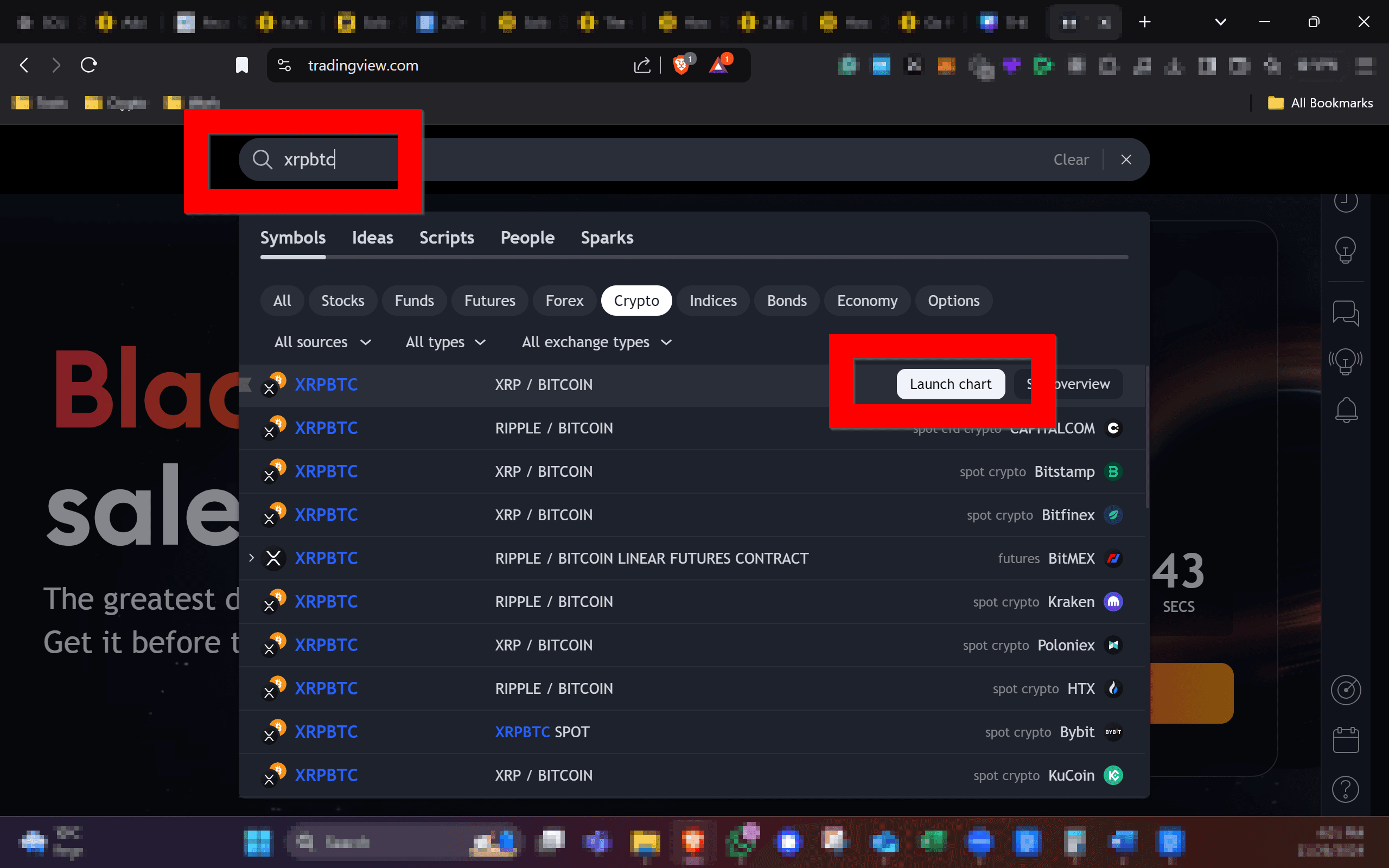
If the BTC-denominated price of XRP goes up, it means that XRP is outperforming Bitcoin (because we could get more BTC per XRP we hold).
Sadly, XRP has been trending down for literally seven years:
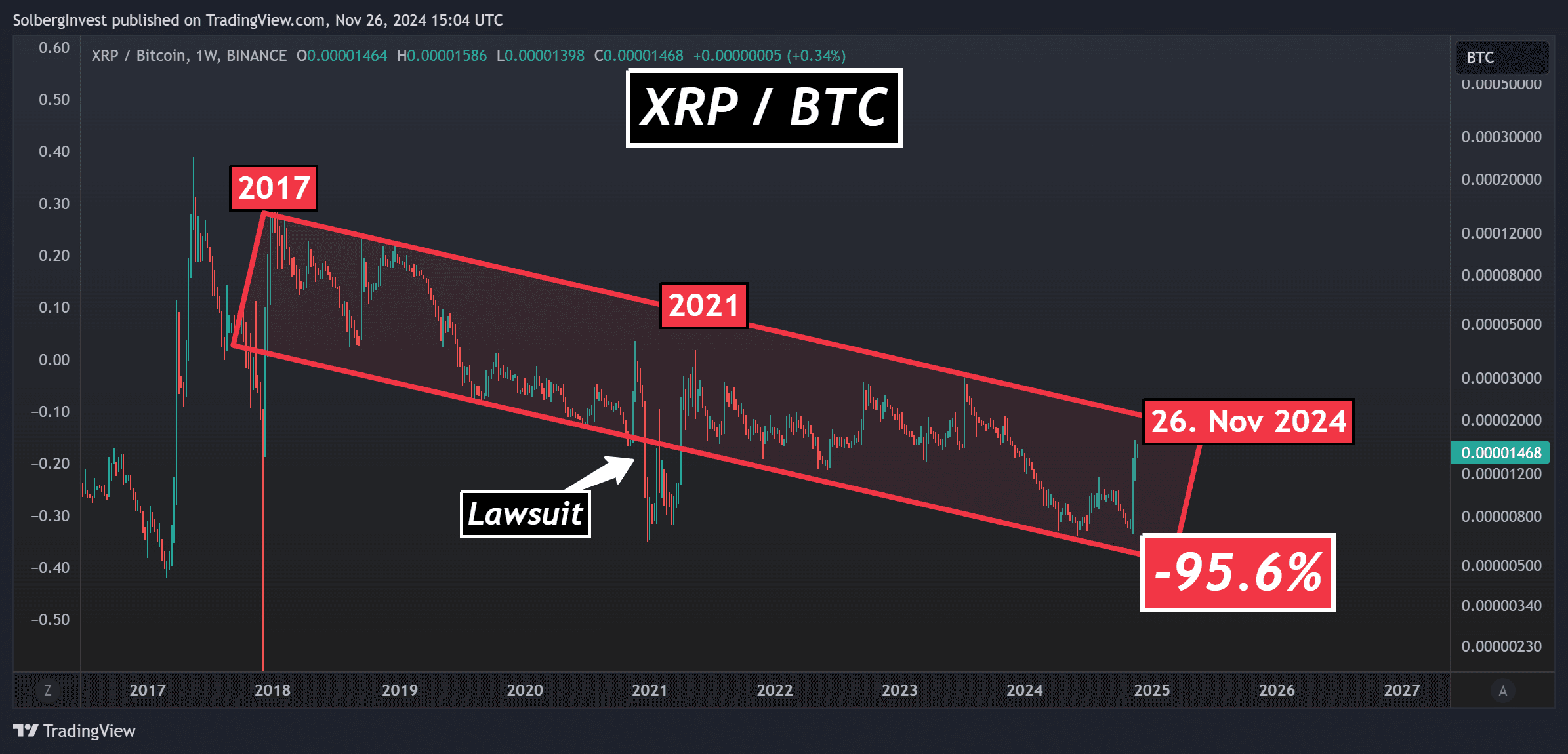
Of course, this can turn around at any moment. And you should not read this as a statement about XRP.
What I'm trying to say is this:
Altcoins come with higher risk. Persistent underperformance can mean that the added risk is no longer justified.
Other than looking at its relationship with Bitcoin, here are five other ways you can check if your altcoin is dead:
#1 Developer Activity
If the devs behind your coin haven’t shipped updates, hit roadmap goals, or announced new partnerships in months, you’re in trouble. A coin without active development is like a ship without a captain—it’s going nowhere.
Don’t guess. Check their GitHub, website, or social media. No updates? It’s time to re-evaluate.
The fastest and easiest way to get an idea is to check their official X page. You can find a link to it on the coin page on CoinMarketCap.
For example, clicking the link with a red ring around it below would take me to Solana's official X profile:
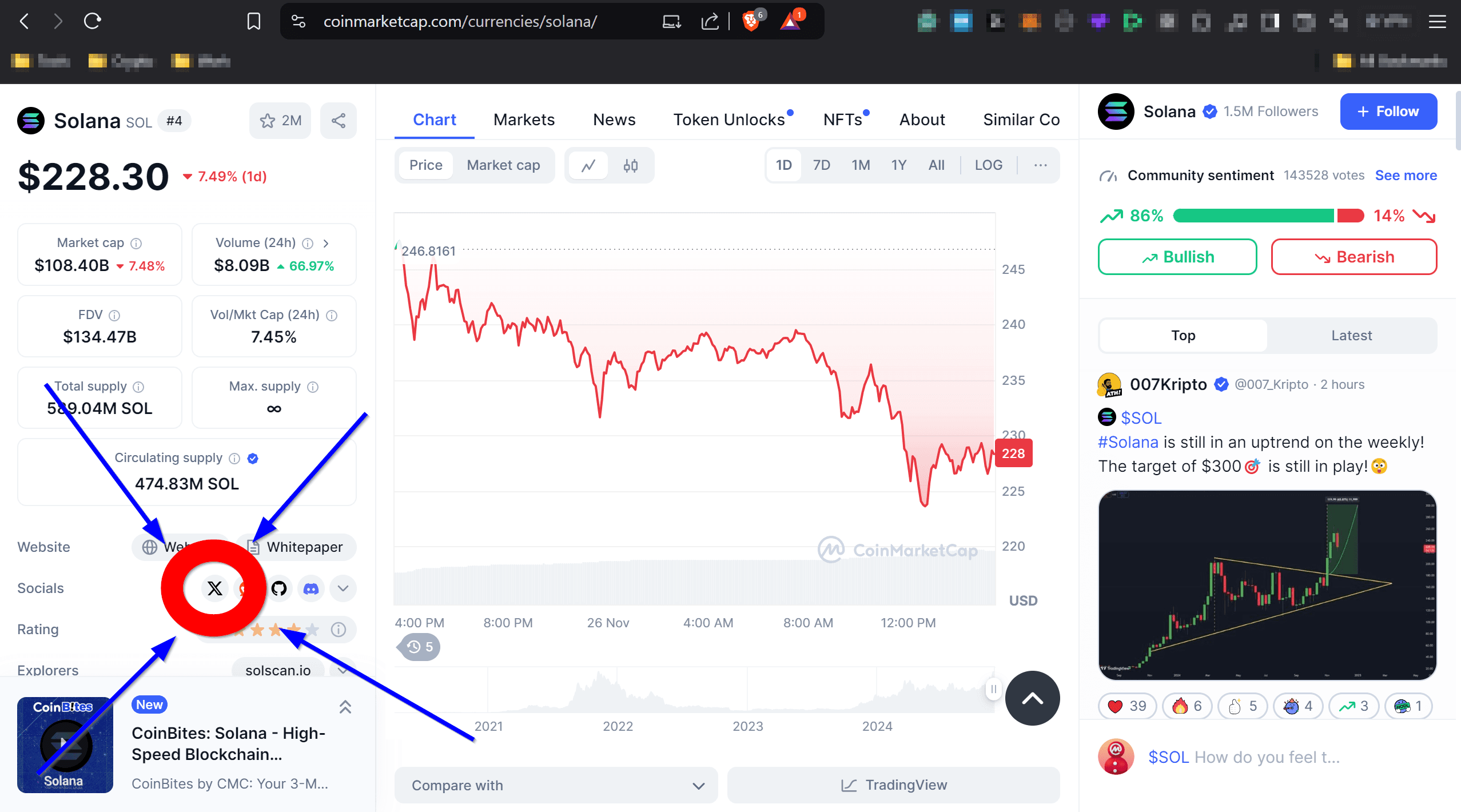
If they're not posting at least weekly, I would be worried.
#2 Trading Volume
Volume is the heartbeat of a coin. If the 24-hour trading volume is low or declining, it means fewer people are buying and selling. That’s a big red flag.
No volume means no liquidity. No liquidity means good luck selling when you need to.
Use CoinGecko or CoinMarketCap to check this. If the volume is drying up, it’s a sign you’re holding a zombie.
In bearish times, volume normally fades. To get a relative view on it, compare the volume trends to the trend of Bitcoin's volume.
#3 Real-World Use Case
Crypto is filled with projects that sounded great in a bull market but didn’t survive contact with reality.
Ask yourself:
Does this coin solve a real problem?
Are people actually using it?
If the answer is no, or if competitors are doing it better, the market has probably moved on.
This is the most important part of any fundamental analysis. The fundamental-analysis guide explains the process in more detail.
#4 Community Engagement
Every successful crypto project has a loyal, active community. If the Telegram group, Discord server, X community, or subreddit is a ghost town, your coin might be too.
Check in. Are people excited? Are the devs interacting? If it’s radio silence, take it as a warning.
#5 Market Position
If your coin has dropped 100+ spots on CoinGecko or CoinMarketCap in the last year, it’s likely outperformed by almost everything else, which is a clear sign you're losing money by holding a dead coin.
Crypto is a brutally competitive space. Coins that lose momentum often struggle to recover.
What To Do If Your Coin Is Dead
Okay, so if your coin checks most of the boxes above, it’s time to stop hoping and start acting. Here’s the plan:
1. Sell on the Pumps
Even dead coins can have sudden price surges. Don’t ignore these. Use them to exit at a better price.
I used price and volume alerts to catch unusual activity, then reassessed whether a spike created an opportunity to reduce the position.
You can analyse the altcoin technically to look for potential resistance and support where you can exit your position.
The technical-analysis guide for beginners explains that process.
2. Reallocate to Winners
Move your money into coins with better fundamentals, active devs, and growing communities. Focus on projects in sectors with momentum—like DePIN, Layer 1s, or anything solving real problems.
3. Stop Chasing Moonshots
After a loss, the temptation is to gamble on the next “hot pick” to make your money back. That’s how most people lose even more.
Instead, focus on building a solid portfolio of high-quality assets. A consistent process reduces reliance on luck.
Buying whatever's green that day is seldomly a winning strategy. You have to be methodical.
4. Learn from the Loss
Every bad trade is a lesson if you’re willing to learn from it. Ask yourself:
Why did I buy this coin in the first place?
What signs did I miss?
When should I have sold it to cut my losses?
Write it down. Use it to make better decisions next time.
The Truth About Dead Coins
Most coins don’t survive. That’s the nature of this game. But the winners—if you find them—can more than make up for the losers.
Here’s the takeaway:
Don’t marry your bags.
Stay proactive.
Always be willing to adapt.