

Should you be investing in cryptocurrency vs stocks? Well, they are both great investments, but for very different reasons.
I saw cryptocurrencies as a better fit for someone willing to accept higher risk and do more work. Otherwise, I preferred stocks for their relative simplicity and lower volatility. Time horizon mattered too.
In other words, which one is right for you depends on the risk you're willing to take, and how much effort you're willing to put into it.
Stocks have historically moved more slowly and with less volatility than cryptocurrencies.
Cryptocurrency, on the other hand, is faster-moving and less predictable, with much wider possible outcomes.
Everyone with stock-experience who gives cryptocurrencies a go quickly experiences the difference between crypto and stocks:
In stocks, one is lucky to receive a 10% gain in 12 months. With cryptocurrencies, 10% swings are just another Tuesday!
Is Cryptocurrency or Stocks Right for You?
Should you be investing in the time-tested stock market, or the high risk high reward cryptocurrency market? The right pick depends on two variables:
Your goals
Your risk tolerance
To answer the question of what's the best investment, cryptocurrency or stocks, we have to do three things first:
Defining your investment goals, defining your risk tolerance and looking at practical examples.
Investing in Cryptocurrencies vs Stocks Depends on Your Goals:
Your goals are the most important factor in this equation. It dictates the appropriate steps to take.
You need to clearly state what your investment goals are BEFORE you start investing. Do you want to afford a new car, or a new home? Do you want to afford college for your kids? Do you want to be financially free?
Not defining your goals before deciding what steps you're going to take is like trying to drive to your friend's house without knowing where he lives.
Well, how to I clearly define my investment goals?
You need to create SMART goal:
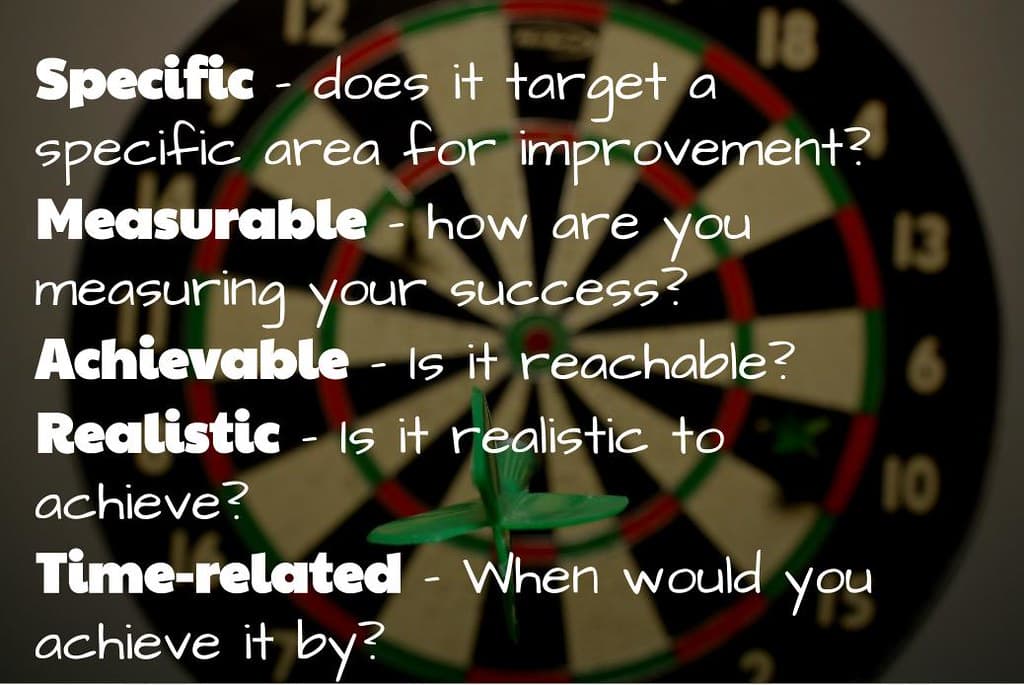
The best way to create your investment goals is to create "SMART goals". You want to make them specific, measurable, attainable, realistic and time-related. This way, you make sure that you actually know when you've achieved it, as well as the steps you need to take to achieve it.
"I want to be rich" is not a goal. That’s a dream, at best. "I want a net worth of 5 million dollars before I turn 40" is a goal.
What you need to do is to brainstorm a little bit, and see what comes out.
Remember, there are no right or wrong goals, they are purely subjective.
It's important to set a goal that creates an emotional response, as they prove to be the best ones. My mindset when it comes to goal-setting in this particular context is this:
If the emotional reaction to the market movements are stronger than the emotional reaction from your goal you screwed.
In other words, you need a goal that gives you a stronger emotional reaction than the future price movements of the investment.
Now that you have your goal, we need to figure out the best ways to achieve it.
What are the action-steps you need to take to reach your goal?
To find the action steps you need to take, we'll have to dig deeper. The reason being that the appropriate steps depends on YOU.
It depends on what risk tolerance you have, what lifestyle you currently have, as well as the lifestyle you desire.
Let's go ahead and map out your risk profile, as this will get us closer to answering the big question; should you invest in stocks or bitcoin?
How Risk Profile Decides if Investing in Cryptocurrencies or Stocks is Right for You
Defining your risk profile can be tricky. What metrics should we use? What does it actually mean?
Simply put, your risk profile is a measurement of the amount of risk you’re comfortable with.
In my experience, the best way to measure this is on a scale from one to ten.
Five means you’re just as exited by making money, as you’re afraid of losing money.
**In other words, if you don't care about losing money, and you're thrilled out this world by winning money, you're a ten.
If the opposite is true, your a one.**
In my experience, most people are either a 4 or a 6. But in the end, only you can figure this out.
Take a minute to think about it, and write it down next to your goal.
Having a hard time finding your risk profile? Try to answer questions like these:
"Would you flip a coin if you'd get 10 grand if you win, but lost 5 grand if you lost?"
"How much money are you comfortable with losing in the next year should your investing goes south?"
We're now one step closer to the answer. Let's set up a few examples to see what fits for different goals and risk levels:
Practical Examples of Investing in Cryptocurrency vs Stocks
John dreams about becoming financially free, and is willing to work hard for it. He's currently 30 years old, and has a hard time deciding if he should be investing in cryptocurrencies vs stocks.
His friend Ben has the same problem, he can't decide between stocks and cryptocurrencies. Ben does not dream about being financial free, but wants to send his 2 year old kid to college when the day comes.
They figure out their risk profile. John is a 7, and Ben is a 3. They go old-school, and set up pros & cons lists:
Stocks
Relatively low risk
Time tested
Easy to understand
Lower returns
High fees
Hard to pick winners
Bitcoin
High returns
Low fees
No need to pick winners
High risk
Complex
Not insured
There are a lot of strong arguments to be made for investing in both cryptocurrency and for stocks.
What they need to do now is to figure out which arguments they should pay the most attention to.
**The three most obvious and important factors is:
The potential return on investment
The risk of the investment
The amount of work it takes to go through with it.**
What Should John do?
Given his goal of financial freedom, the high returns of Bitcoin definitely is an important factor. He needs a lot of money to become financially free, and therefore should prioritize high returns.
Stocks having a low risk, and being time tested would be important had John had a lower risk level. John being a seven, he shouldn't get hung up on it.
The fact that Bitcoin investing is more complicated than investing in stocks shouldn't stop him, as he's willing to work hard to reach his goals.
Within this simplified example, cryptocurrency better matched John's risk profile and goals.
What Should Ben do?
Given his goal of saving up for college for his kid, which is two years old, he has 16 years to do it.
16 years is a long time, therefore, the speed at which Bitcoin increases in value is not as important as it is in Johns' case.
What Ben need is a steady increase over a long time.
Given a 7% annual increase, whatever money he invests now will 3x in 16 years.
If he dollar cost averages over time, the model improves his chances of reaching the goal.
Stocks having a low risk, and being time tested is important for Ben because of his lower risk level.
The fact that Bitcoin is much riskier than stocks is something that should matter a lot in his decision.
Given his risk profile, goals and pros and cons list, stocks better matched Ben's needs in this example. He might reach his goal faster with Bitcoin, but speed was not the most important factor in his situation.
Whether he has enough money after 5 years, 10 years or even 15 years does not matter. What matters is that his kid goes to college.
I would therefore have chosen stocks for Ben because of their lower volatility and longer record.
Applying the Framework
Figure out what's most important for you, given your personal risk tolerance and goals, and weigh the arguments for both sides.
This method is universal. It can be used to figure out lots of stuff: Should you invest in Bitcoin exclusively, or expose yourself to alt coins? Should you trade, or hold long term? How large should you savings-buffer be?
Also, this method is an important step for anyone who wants to create an investment strategy.
Creating an investment strategy helped me make deliberate decisions and hold on to gains.
I've tried investing in cryptocurrencies both with and without one, and let me tell you: Having a strategy is a game changer.
A strategy illuminates the path when the night is at its darkest. It's what shows you the way when your lost.
When the market plummets, and every instinct in your body is screaming at you to panic sell everything, your strategy is like a coach that tells you: "You'll make it. Keep your eyes on the prize".
Creating a tailored strategy is no easy feat, but for me it made the difference between deliberate decisions and improvised ones.
Smart money has purpose behind every action. Dumb money does not.